
How Posture Affects Back Pain, Neck Pain & Headaches | WCC
How Posture Affects Back Pain, Neck Pain & Headaches
Posture plays a much larger role in overall health and comfort than many people realize. The way we sit, stand, walk, and work throughout the day directly affects how stress is distributed through the spine, muscles, joints, and nervous system. Over time, poor posture can contribute to back pain, neck tension, headaches, fatigue, and restricted movement patterns.
Many people associate posture problems with appearance alone, but posture is closely tied to how the body functions. Even small imbalances maintained repeatedly over time can place excessive stress on certain areas of the body and eventually lead to discomfort or dysfunction.
How Poor Posture Affects the Spine
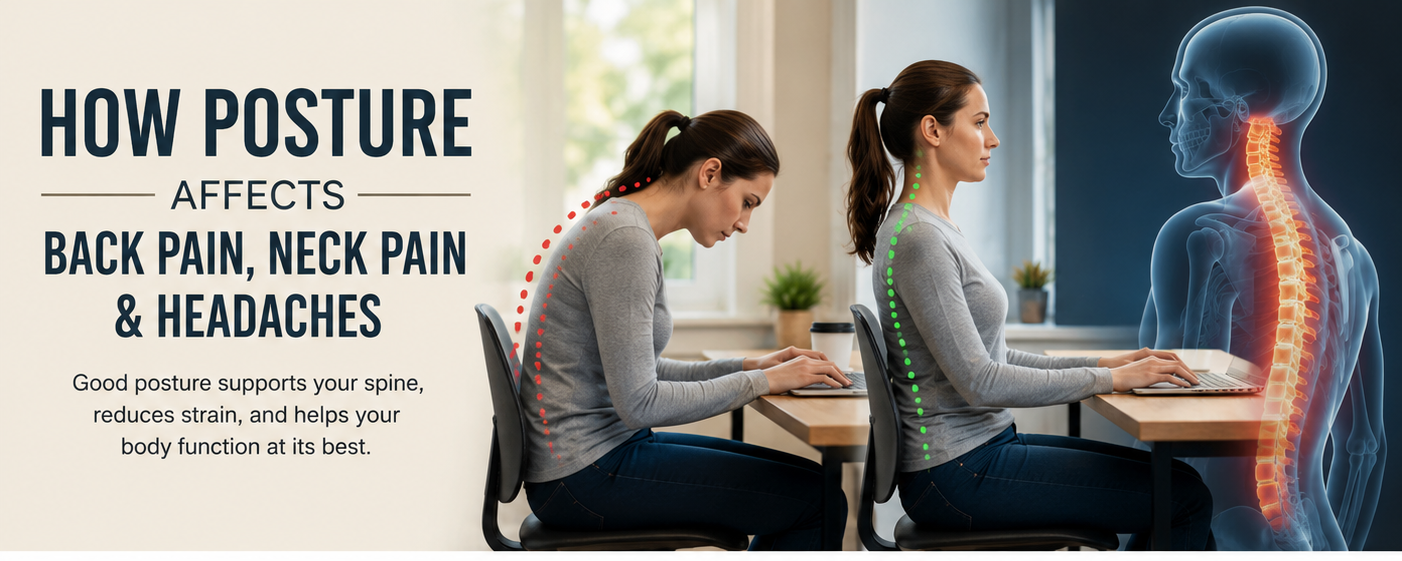
The spine is designed to support the body in a balanced and efficient position. When posture shifts forward, unevenly, or remains in stressed positions for extended periods of time, the muscles and joints surrounding the spine often have to compensate.
Common examples include:
forward head posture from computer use
rounded shoulders
slouching while sitting
uneven standing patterns
prolonged phone use
These patterns can increase strain on the neck, upper back, lower back, and surrounding muscles. Over time, this added stress may contribute to stiffness, irritation, reduced mobility, and chronic discomfort.
The Connection Between Posture and Neck Pain
One of the most common areas affected by posture is the neck. As the head moves forward relative to the shoulders, the muscles of the neck and upper back must work harder to support its weight.
Even small forward shifts in posture can significantly increase the amount of stress placed on the cervical spine and surrounding muscles. This often contributes to:
neck tightness
reduced range of motion
muscle fatigue
tension between the shoulders
recurring discomfort
People who spend long hours working at desks or looking down at phones frequently experience posture-related neck issues without realizing how much daily positioning contributes to the problem.
Can Poor Posture Cause Headaches?
In some cases, posture-related muscle tension and joint stress can contribute to headaches, particularly tension-type headaches. Tight muscles around the neck, shoulders, and upper spine may create irritation and stress patterns that radiate upward toward the head.
Poor posture may also influence how efficiently the muscles and joints of the upper cervical spine function. When these areas become restricted or stressed, some individuals begin experiencing recurring tension and discomfort that may contribute to headache patterns.
Because headaches can have many different causes, proper evaluation is important to determine whether posture or spinal dysfunction may be playing a role.
How Chiropractic Care May Help Improve Posture
Chiropractic care often focuses on improving spinal movement, alignment, and overall body mechanics. In many cases, posture-related discomfort develops gradually over time due to repetitive stress patterns and movement habits.
A chiropractor may evaluate:
spinal alignment
posture patterns
joint mobility
muscle tension
movement mechanics
Depending on the findings, care may include chiropractic adjustments, posture recommendations, mobility exercises, and strategies designed to reduce ongoing stress on the spine.
The goal is not simply temporary symptom relief, but improving how the body moves and functions over time.
Small Daily Habits Can Make a Big Difference
Improving posture is often less about “sitting perfectly” and more about reducing repetitive stress throughout the day. Small adjustments to workstation setup, movement habits, standing posture, and screen positioning can significantly reduce strain on the spine and surrounding muscles.
Taking regular movement breaks, improving ergonomic setup, and becoming more aware of posture patterns can help support long-term spinal health and overall comfort.
Our Approach at Western Carolina Chiropractic
At Western Carolina Chiropractic, we evaluate posture and spinal movement patterns as part of a comprehensive approach to chiropractic care. Many patients experiencing back pain, neck tension, headaches, or posture-related discomfort are often dealing with underlying movement and alignment issues that may have developed gradually over time.
Our goal is to help patients better understand how their body is functioning, identify contributing factors, and create a care plan designed around long-term improvement and overall function.


